Richmond Beach · Shoreline, Washington
Art by Bridgette
I paint gardens, water views, nature, and life at sea. This page carries my design proposal for the Richmond Beach Community Association's 2026 orca project, alongside recent work.
Proposal · RBCA 2026 Orca Project
The Shared Flora of Richmond Beach
Hand-painted design for one 42 by 24 inch orca body.
The design wraps the whole shoreline around the animal. A poured Puget Sound runs along the lower body and a green bluff along the back, planted with what actually grows up there. Kinnikinnick carries most of it, low and evergreen and stubborn against salt wind, the way it really grows at Kayu Kayu Ac, threaded through with western redcedar, salal, and red alder.
Kinnikinnick is the anchor, and not arbitrarily. The park at the bottom of my hill is called Kayu Kayu Ac, an anglicized spelling of the Lushootseed k̓ayuk̓ayuac, which means kinnikinnick plant. The word is the berry, k̓ayuk̓ayu, plus the suffix -ac, plant. Shoreline chose it in 2009 on the advice of Edith Nelson, a Duwamish elder who lives in Richmond Beach.
The park at the bottom of my hill is named after the plant.
It was a reasonable thing to name it after. When T. T. Waterman mapped Indigenous place names along this shore in 1916, he recorded a kinnikinnick gathering site on this stretch of it. The plant grew here in quantity, and people came for it.
I grew up around kinnikinnick in Richmond Beach and have watched it move through its life cycle year after year. It is still growing in the same places. Painting the orca in it is not a decorative choice about a native plant. It is the name of the park at the bottom of my hill, painted onto the animal that swims past it.
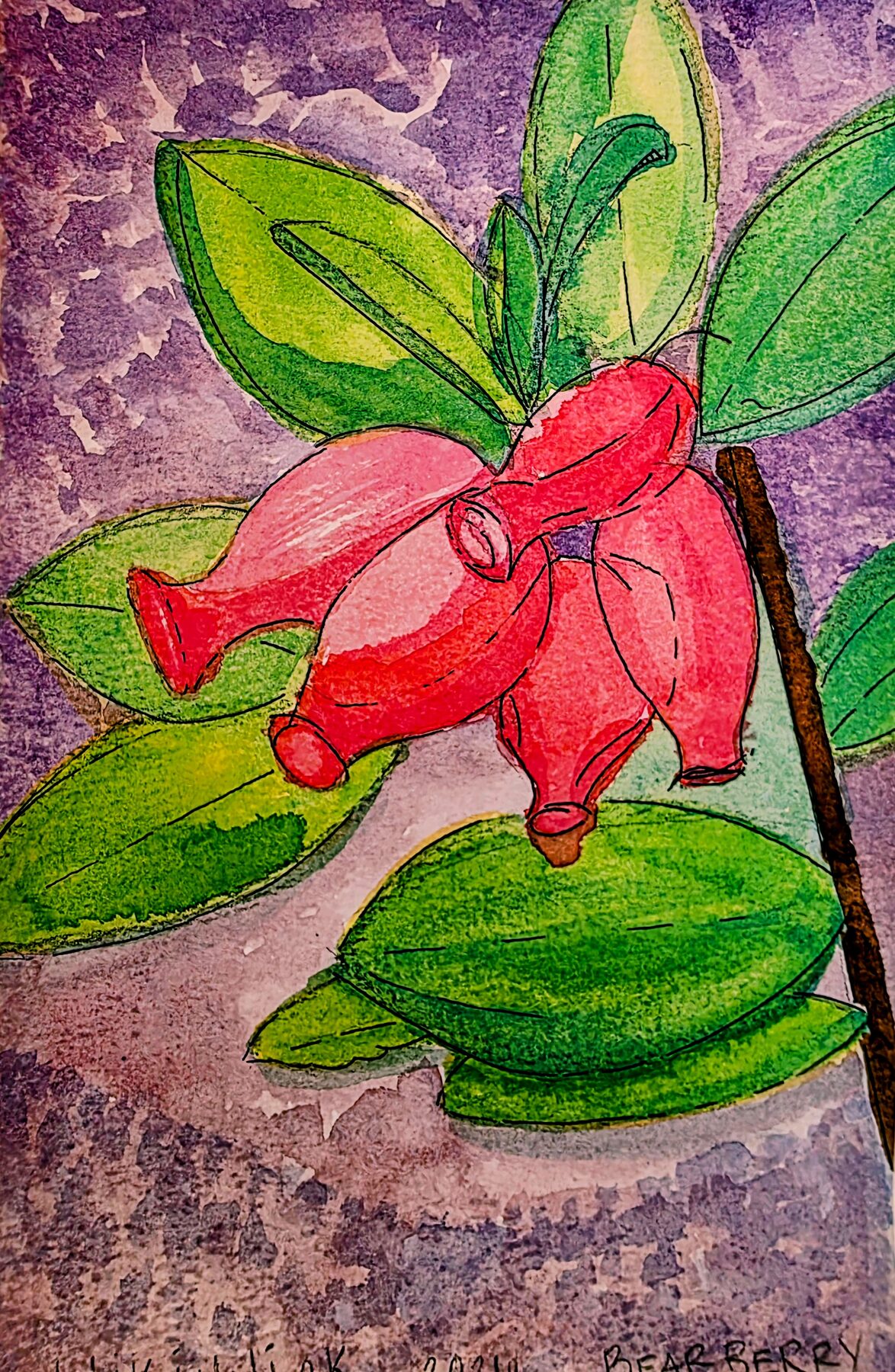
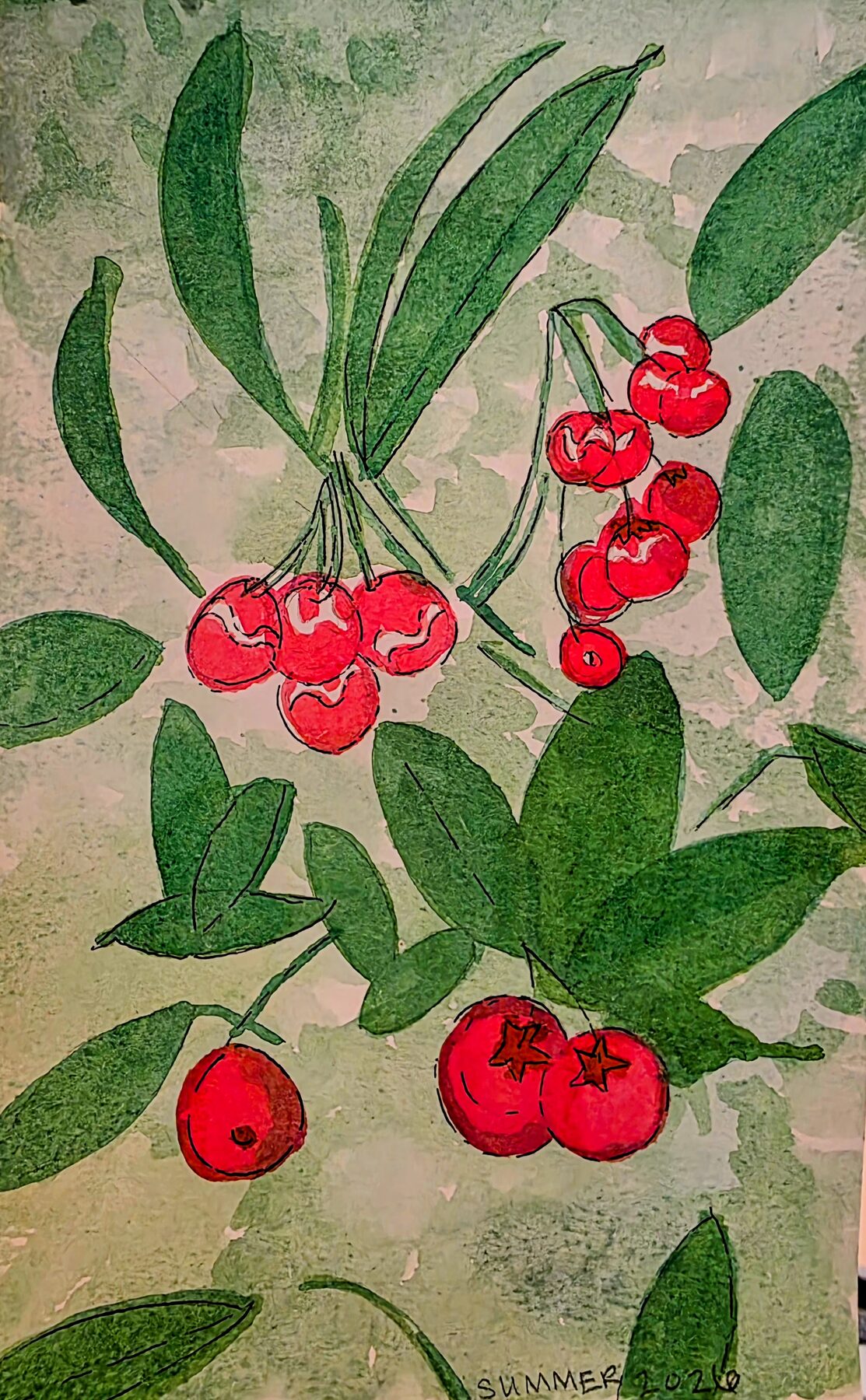
I painted both of these from the plant this year, before the design existed. The orca is built from work already in hand.
A traditional canoe runs low along the waterline at the front of the animal, and a log cabin sits in the pectoral fin behind it. The canoe belongs to the people who have been on this water the longest, and the cabin to the ones who came after. The orca carries them both along the same stretch of shore, under the same plants, above the same water.
How it will be painted
Two techniques, meeting at the waterline, which is where they meet in life too. The lower body is poured acrylic, the same method behind my pour paintings, let loose so the blues move the way water does. The bluff above is built in thinned acrylic glazes over white primer, layered transparently so the leaves and berries hold the luminosity of watercolor while staying inside a system built to survive ten years outdoors. Color is built up rather than laid down, so the white of the primer keeps working through the greens from underneath.
Layout
The shoreline in section, wrapped around the body
A green bluff over blue water, with roses and a canoe at the front, a cabin in the pectoral fin, a redcedar up the dorsal, and kinnikinnick carrying the tail.

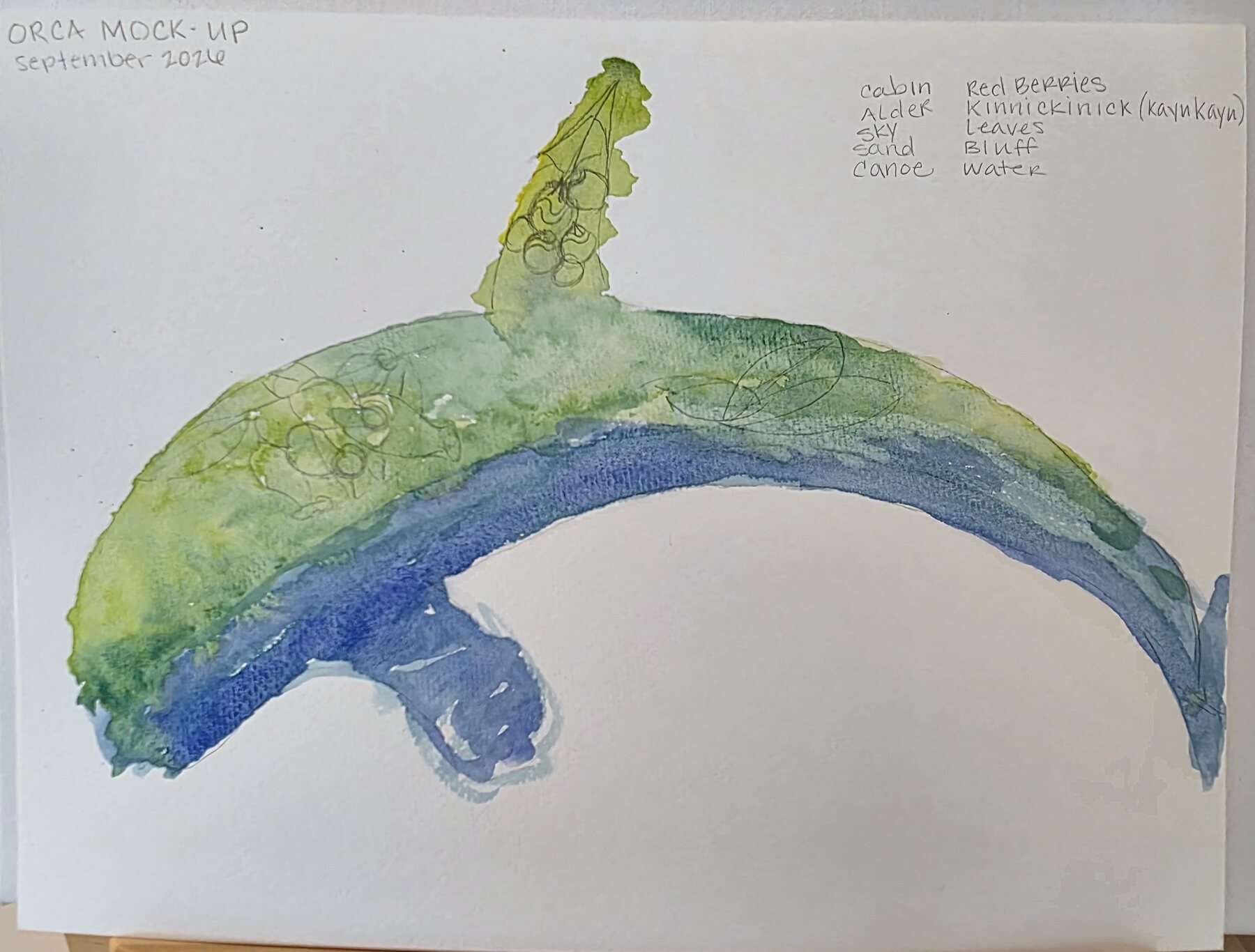
The schematic below keys the design to the parts of the body.
Schematic. Proportions indicative, not to scale.
- 1
The ground
A green bluff along the back over poured blue water along the belly, running the whole length of the body. Everything else sits on top of it.
- 2
Head and front flank
Two wild roses in full bloom, pink with yellow centres, over broad green leaves. The same bloom as my painting Rosa Rugosa.
- 3
Below the roses
A traditional canoe, drawn long and low along the waterline, in the darkest brown on the piece.
- 4
Pectoral fin
A log cabin with a shake roof, set in grass. The settlers who came to this shore later.
- 5
Dorsal fin
A western redcedar climbing the full height of the fin, carrying red kinnikinnick berries at the top, the highest point on the sculpture.
- 6
Midbody
Two pale alder trunks running vertically, bark mottled dark, holding the composition together across the middle.
- 7
Rear flank
Kinnikinnick in flower. The pink urn-shaped bells hang from a brown stem over deep green leaves.
- 8
Tail and flukes
Kinnikinnick in fruit. Red berries with white highlights among green leaves, carrying the design out to the last inch of the animal.
Palette
Eight colors, and two of them I named myself
Sampled from the finished painting. The first two are the mixes I call Richmond Beach Green and Richmond Beach Blue.
- Richmond Beach GreenMy name for it. The bluff.
- Richmond Beach BlueMy name for it. The water.
- Wild roseDeep pink, at the head
- Rose centreGold, the only warm note
- Kinnikinnick flowerPink bells, the rear flank
- Kinnikinnick berryRed, flukes and dorsal fin
- Western redcedarTrunk, cabin, and canoe
- Cedar and salalThe lighter green
Portfolio
Recent work
Acrylic pour, watercolor, and gouache on canvas, board, and paper. Select any piece to see it larger.
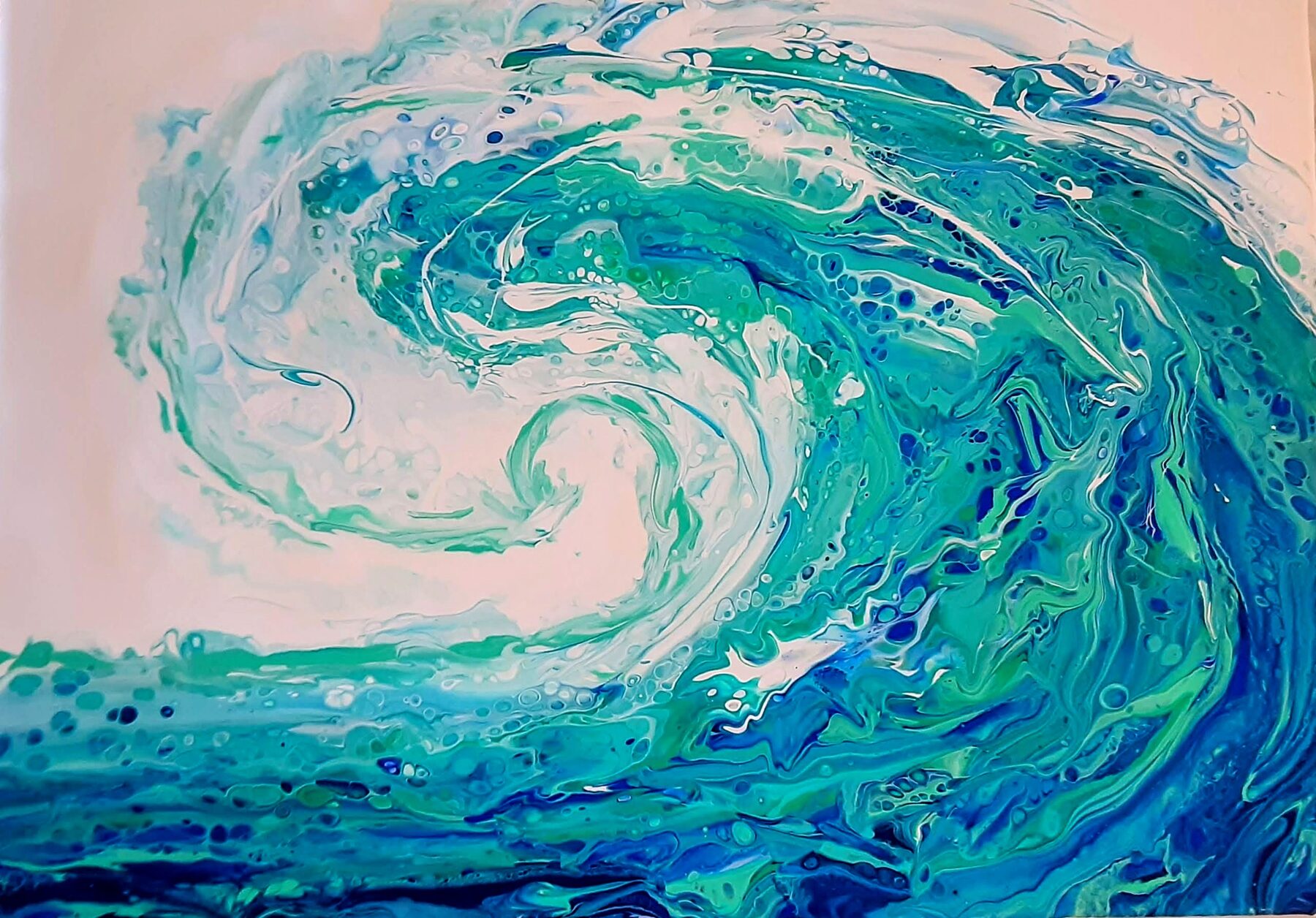
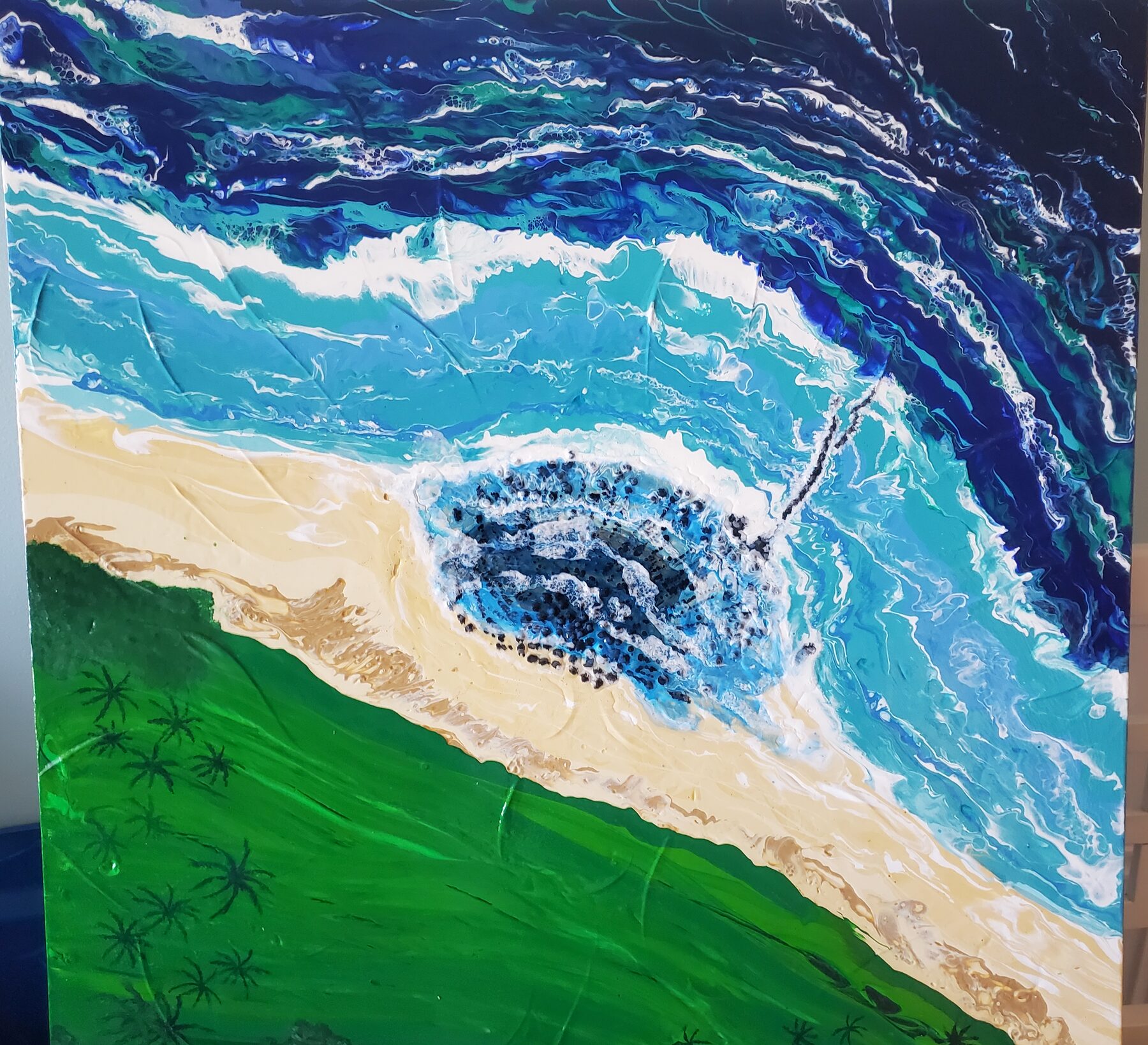
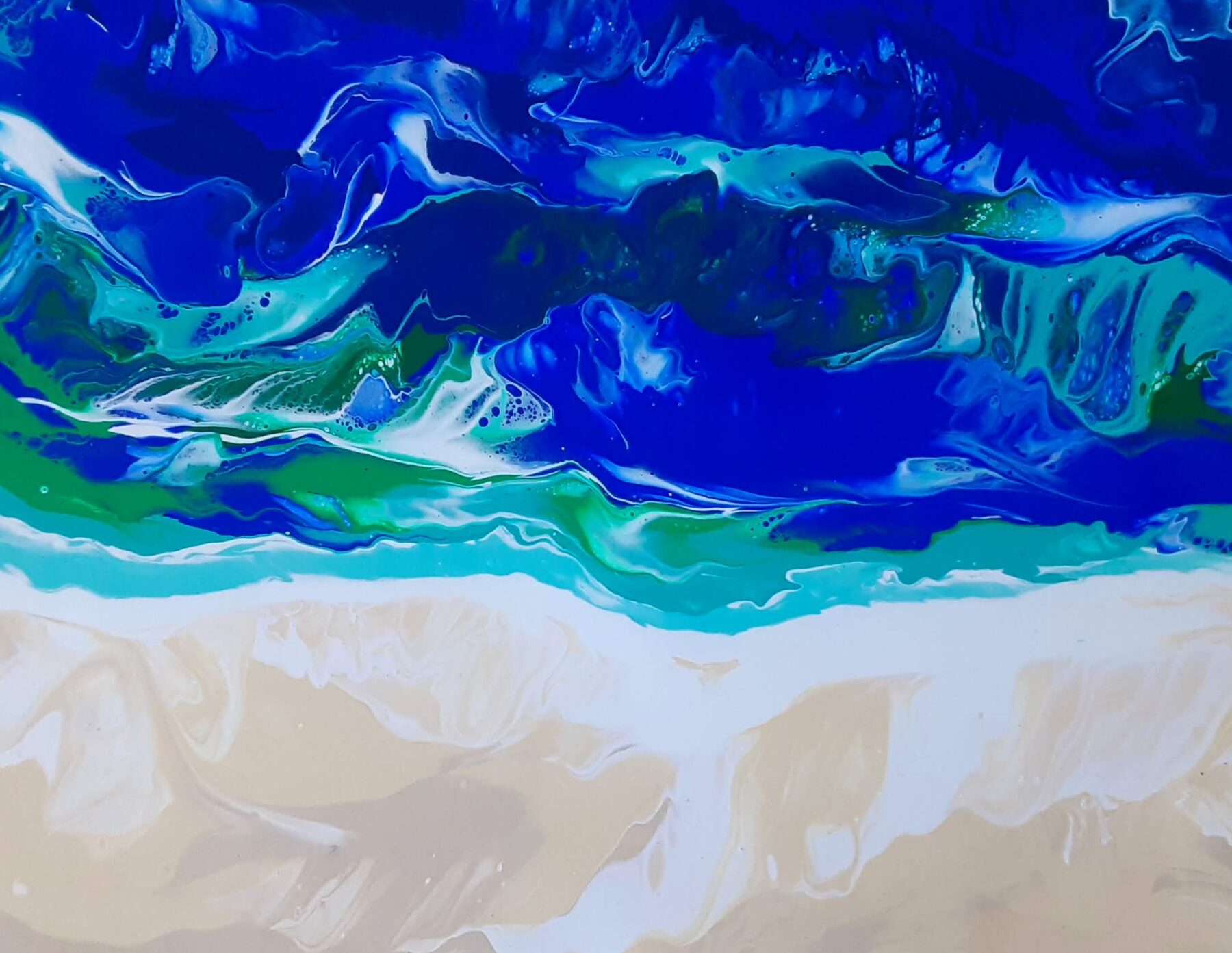
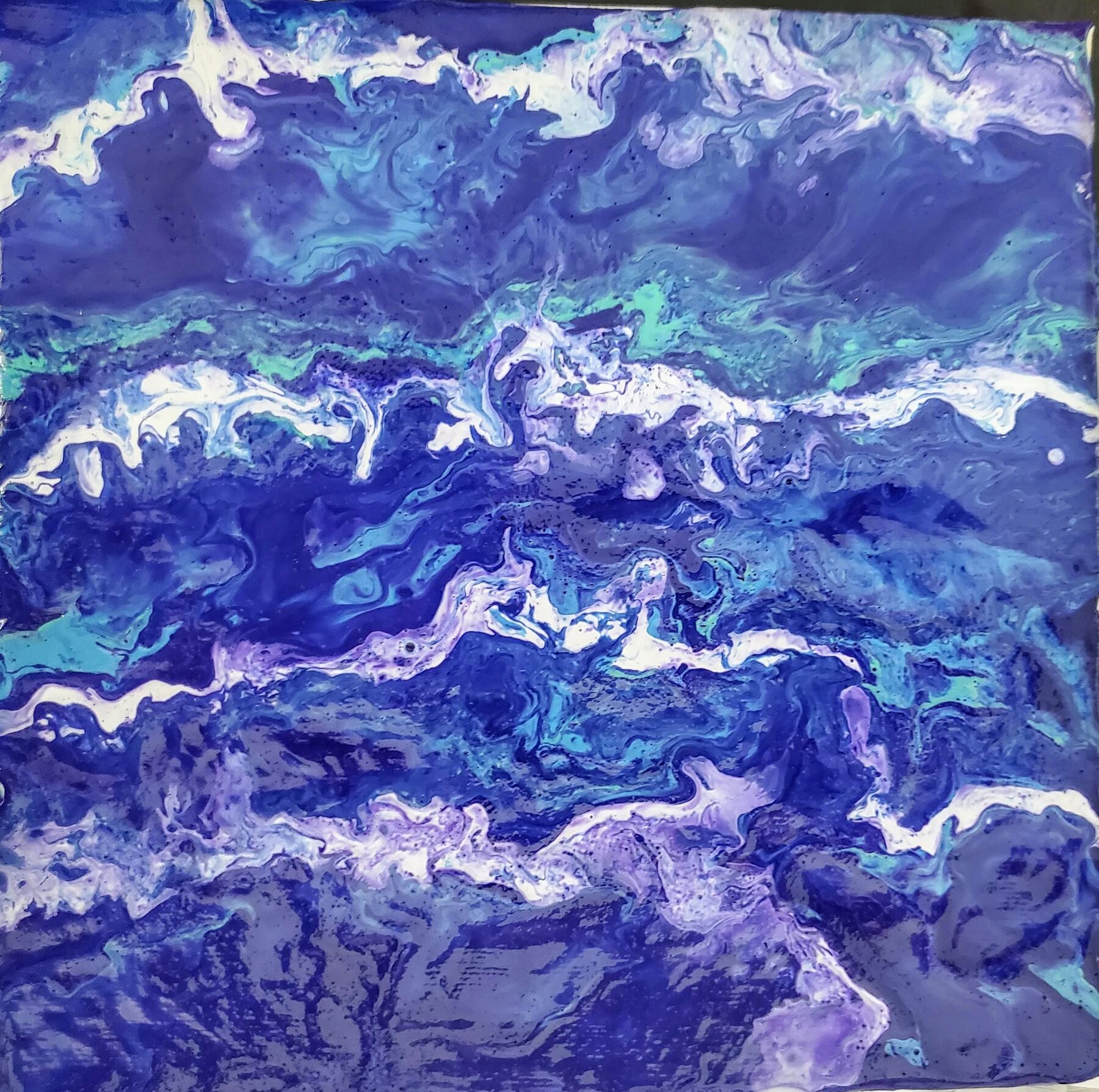
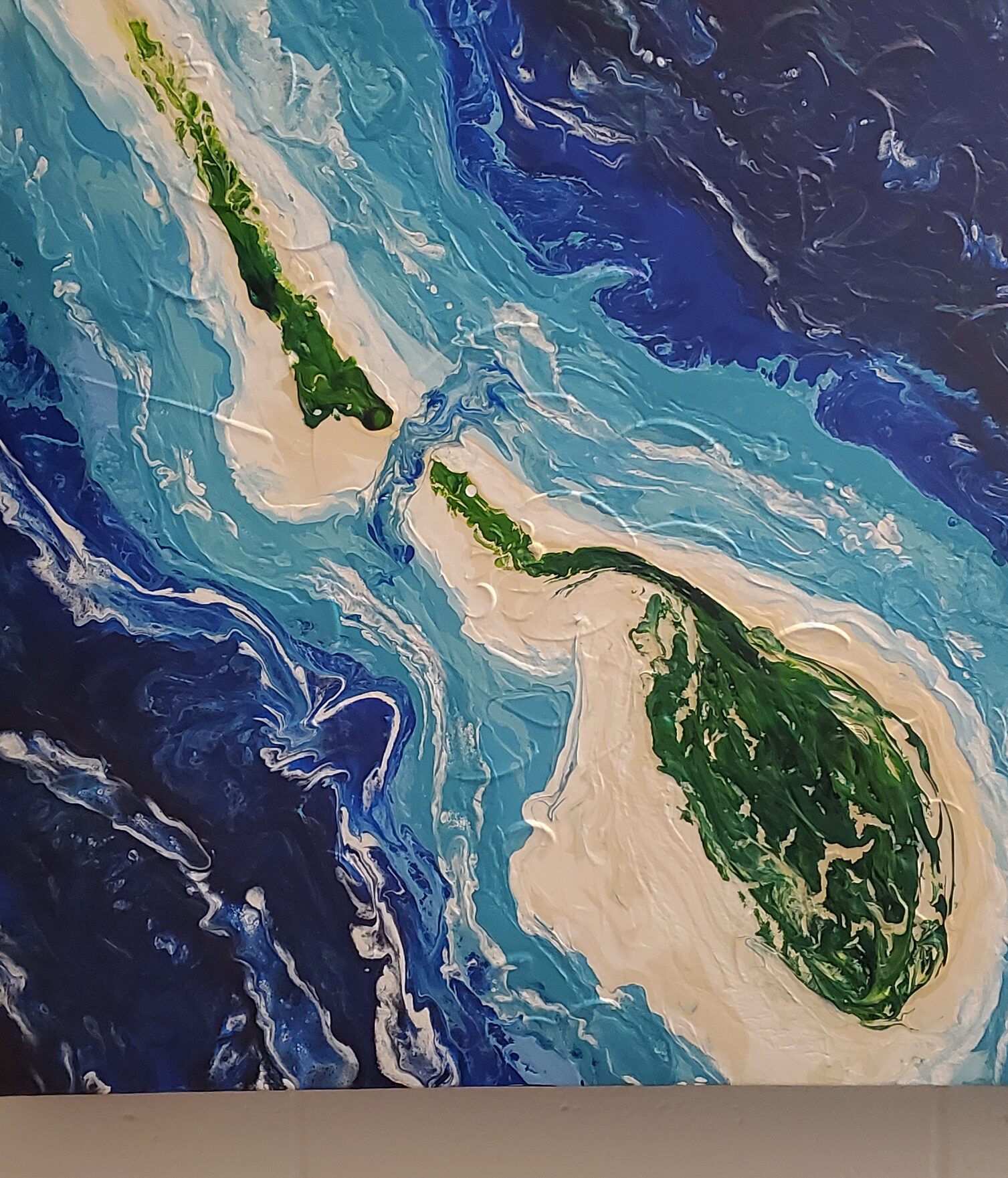
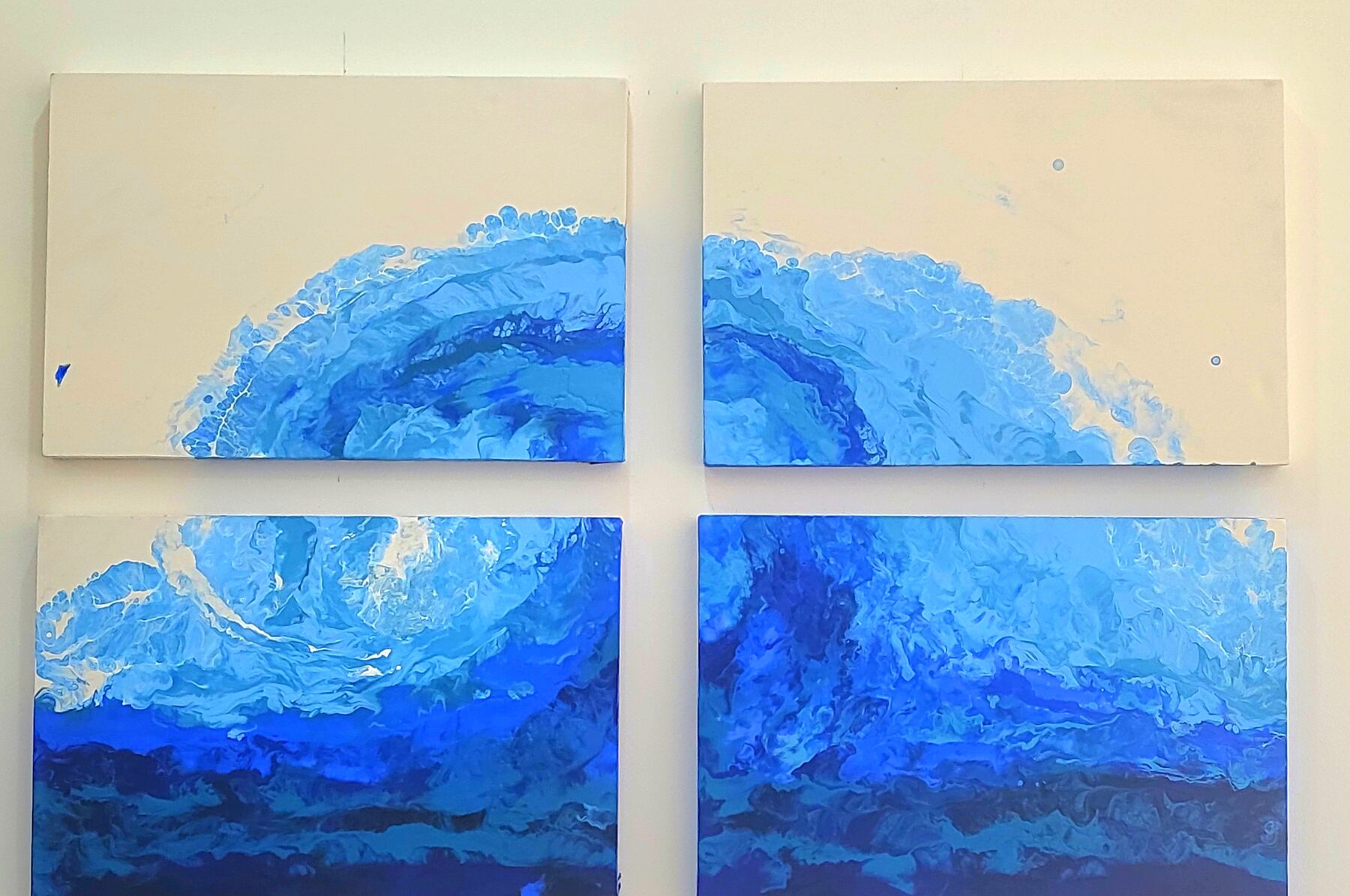
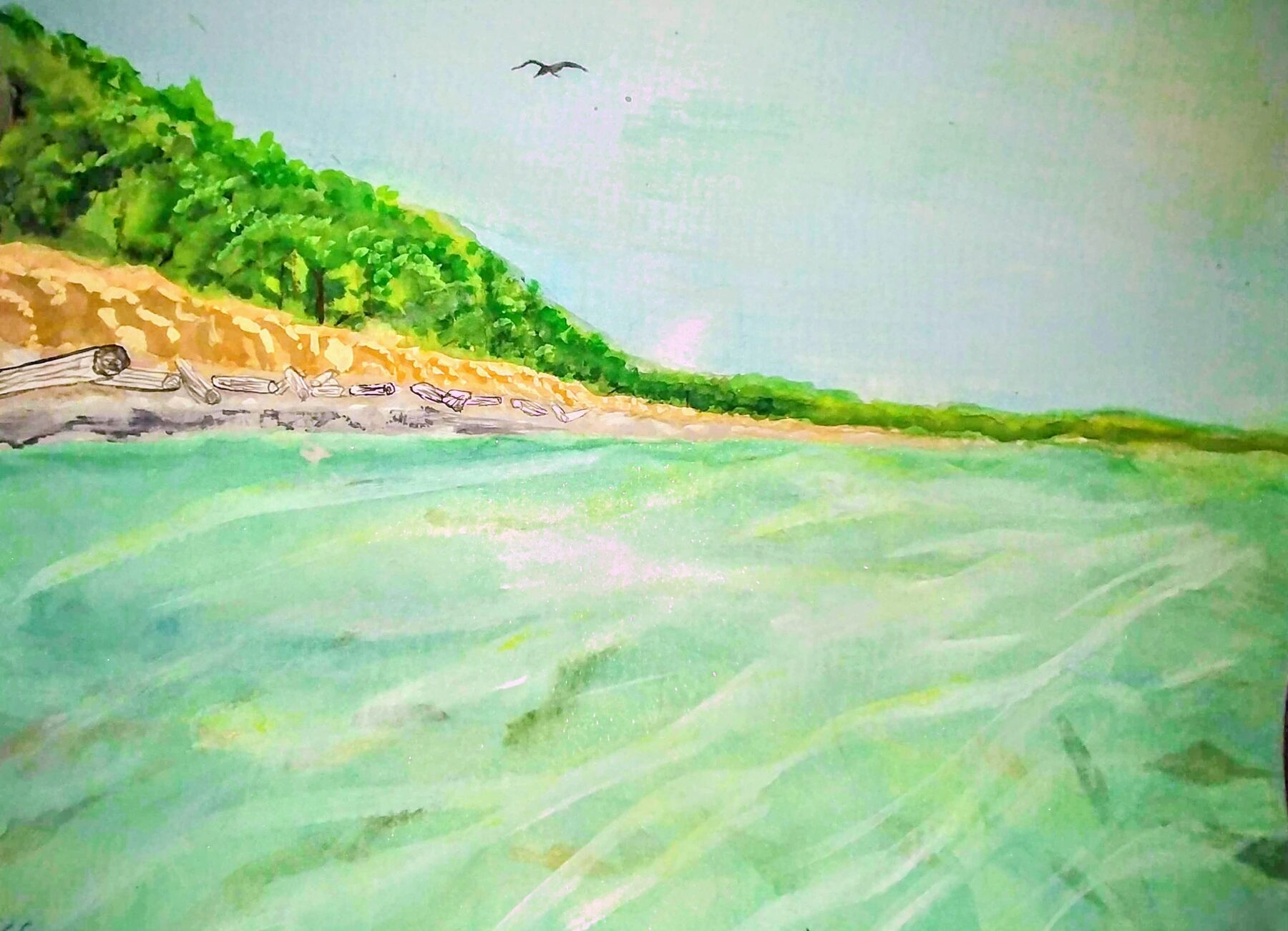
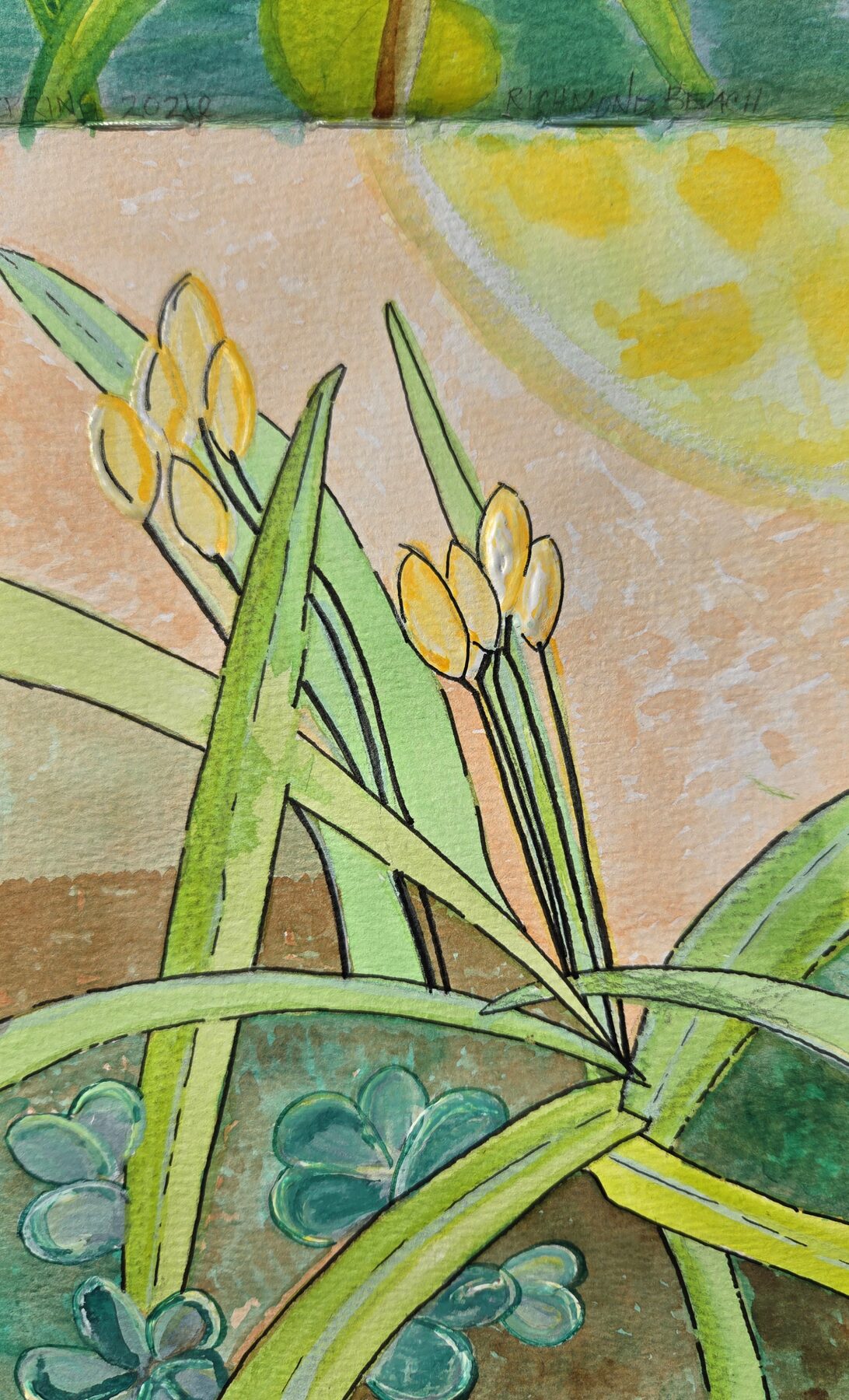
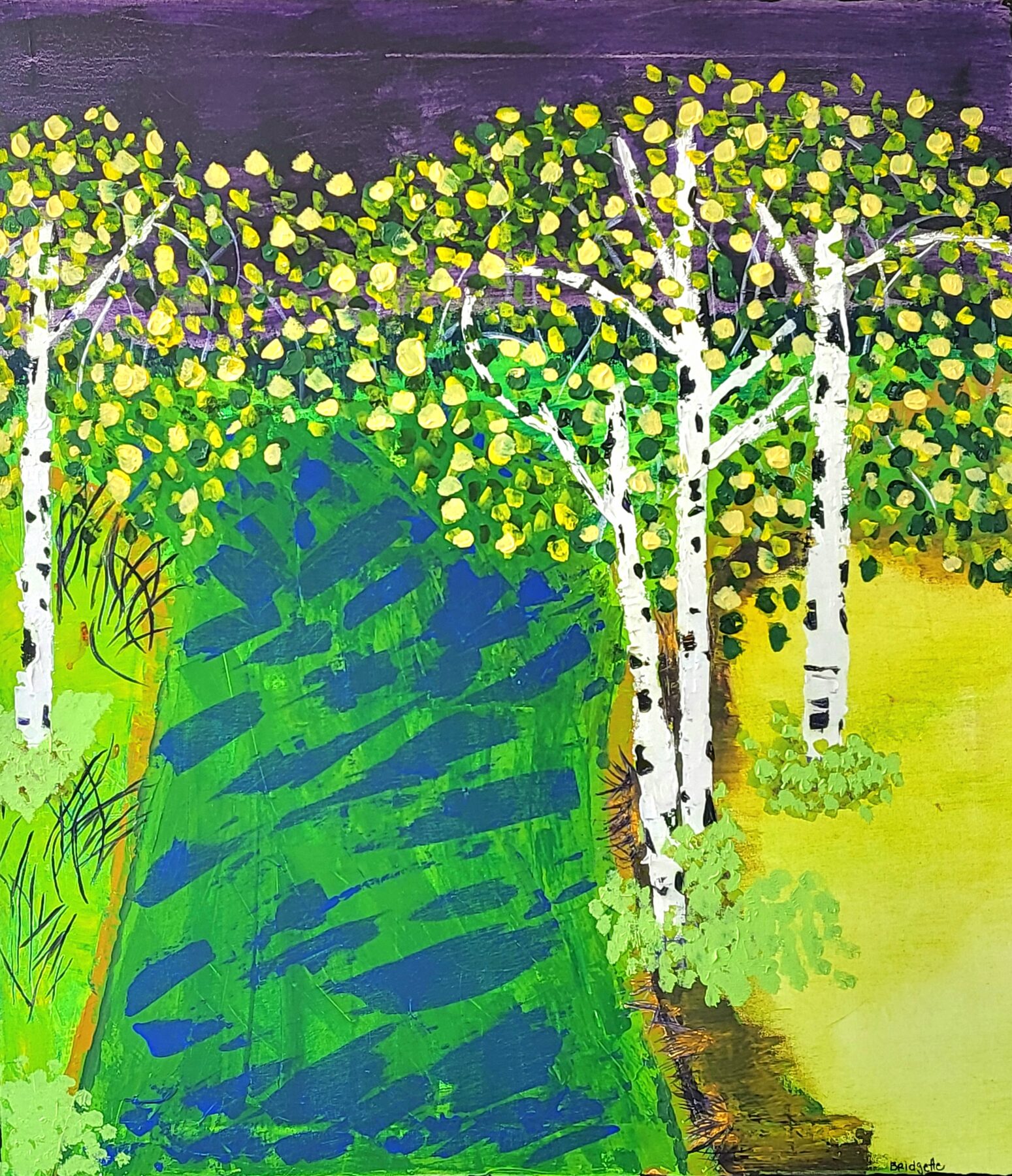
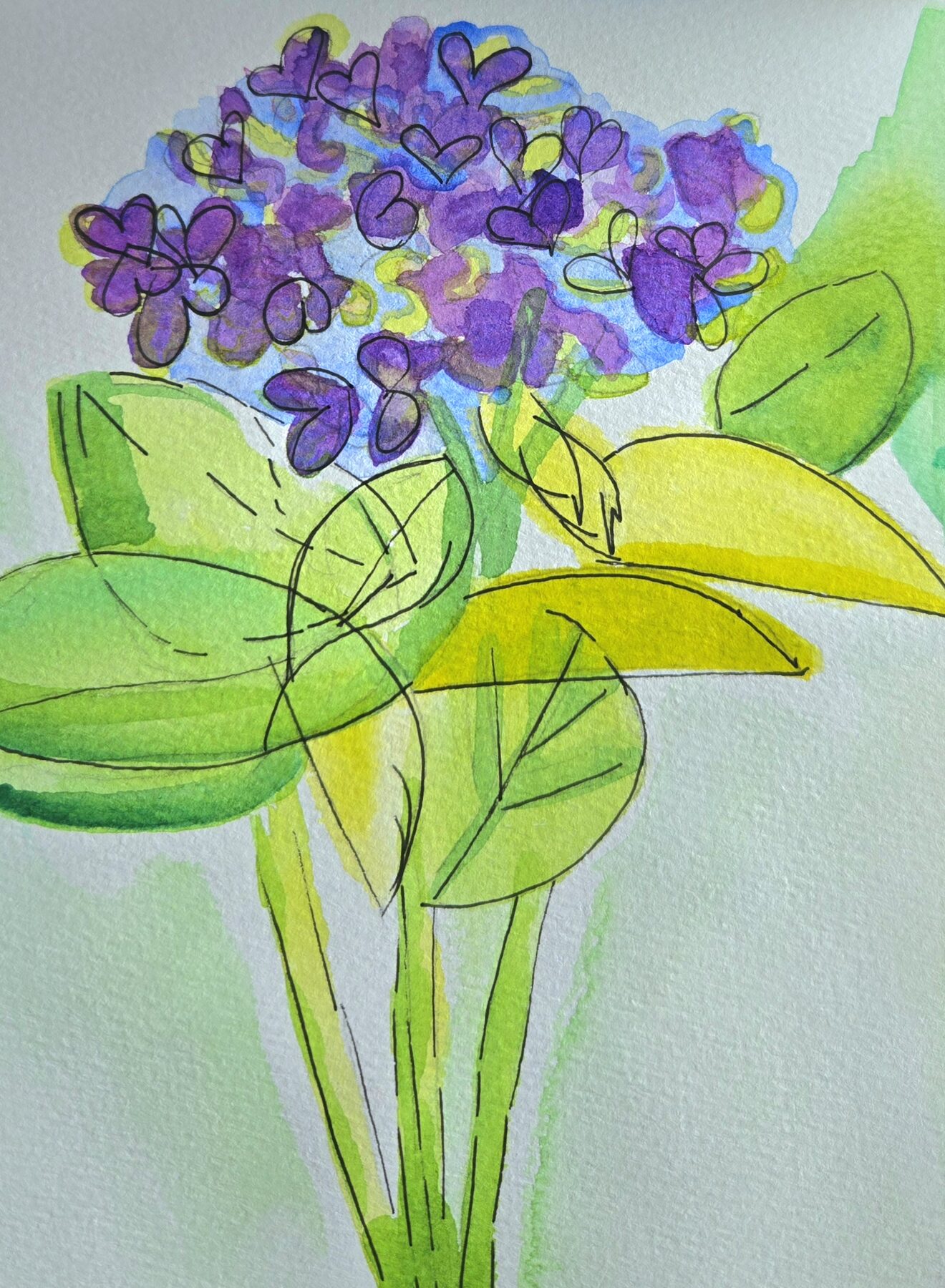
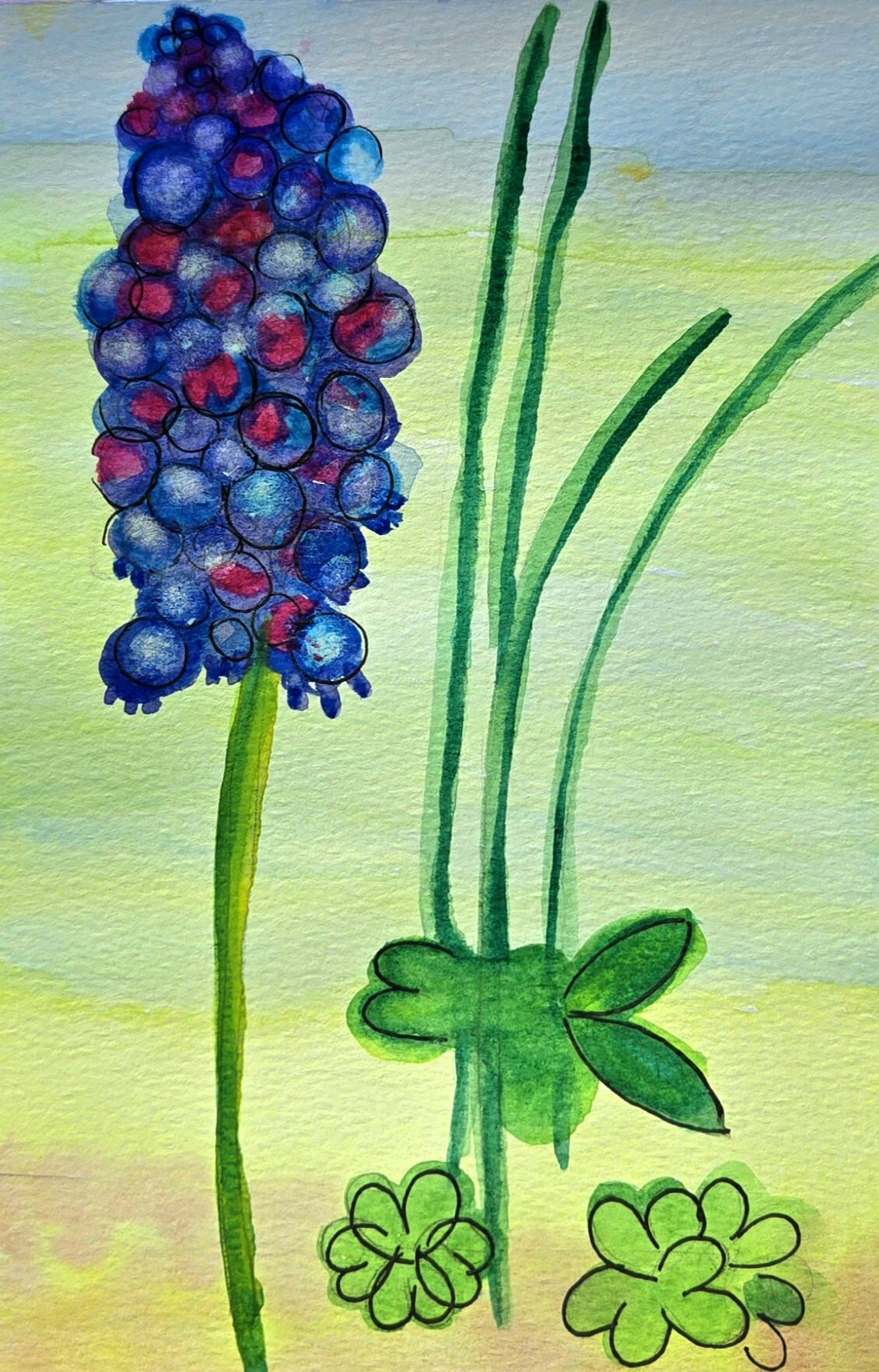
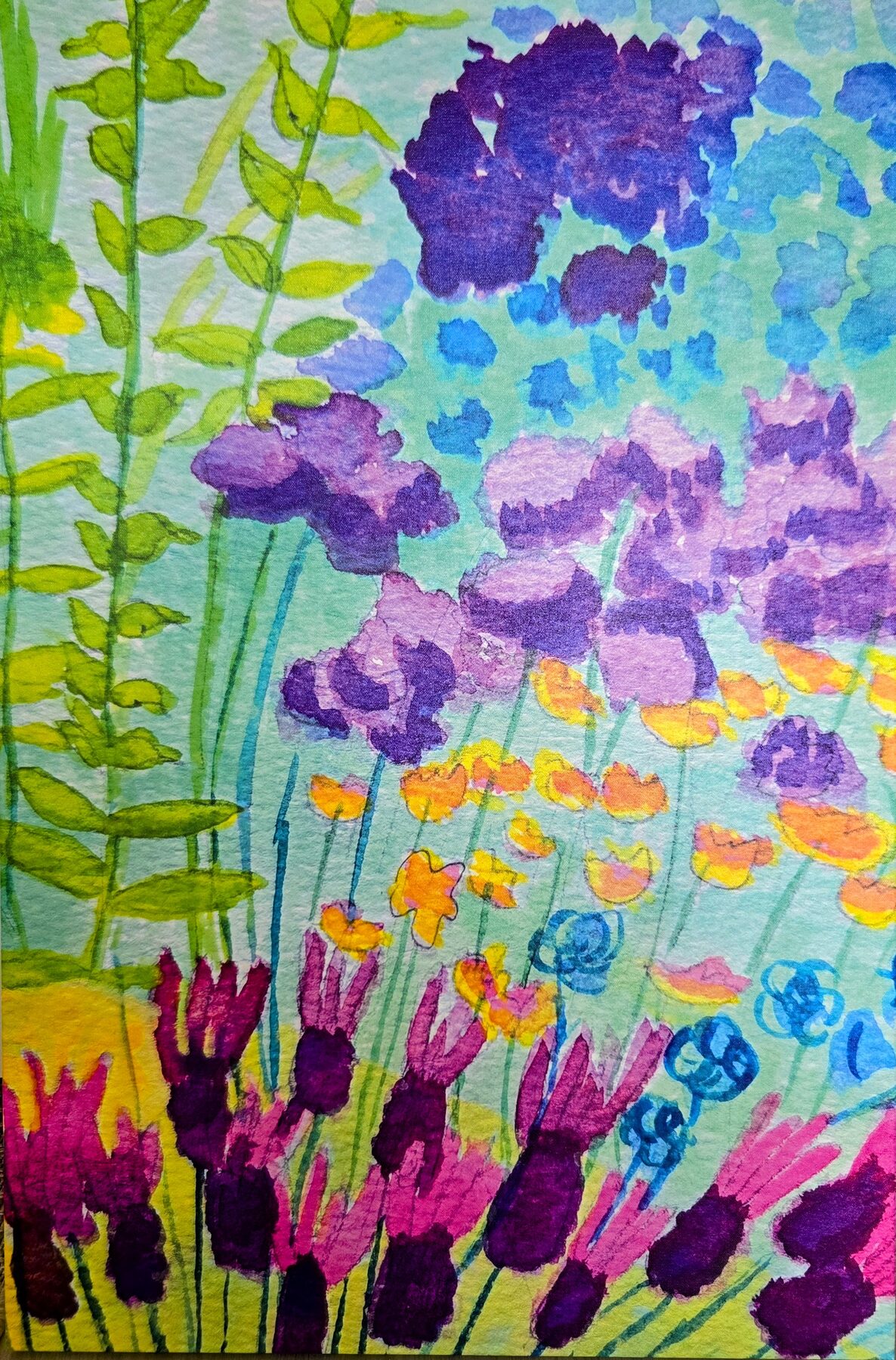
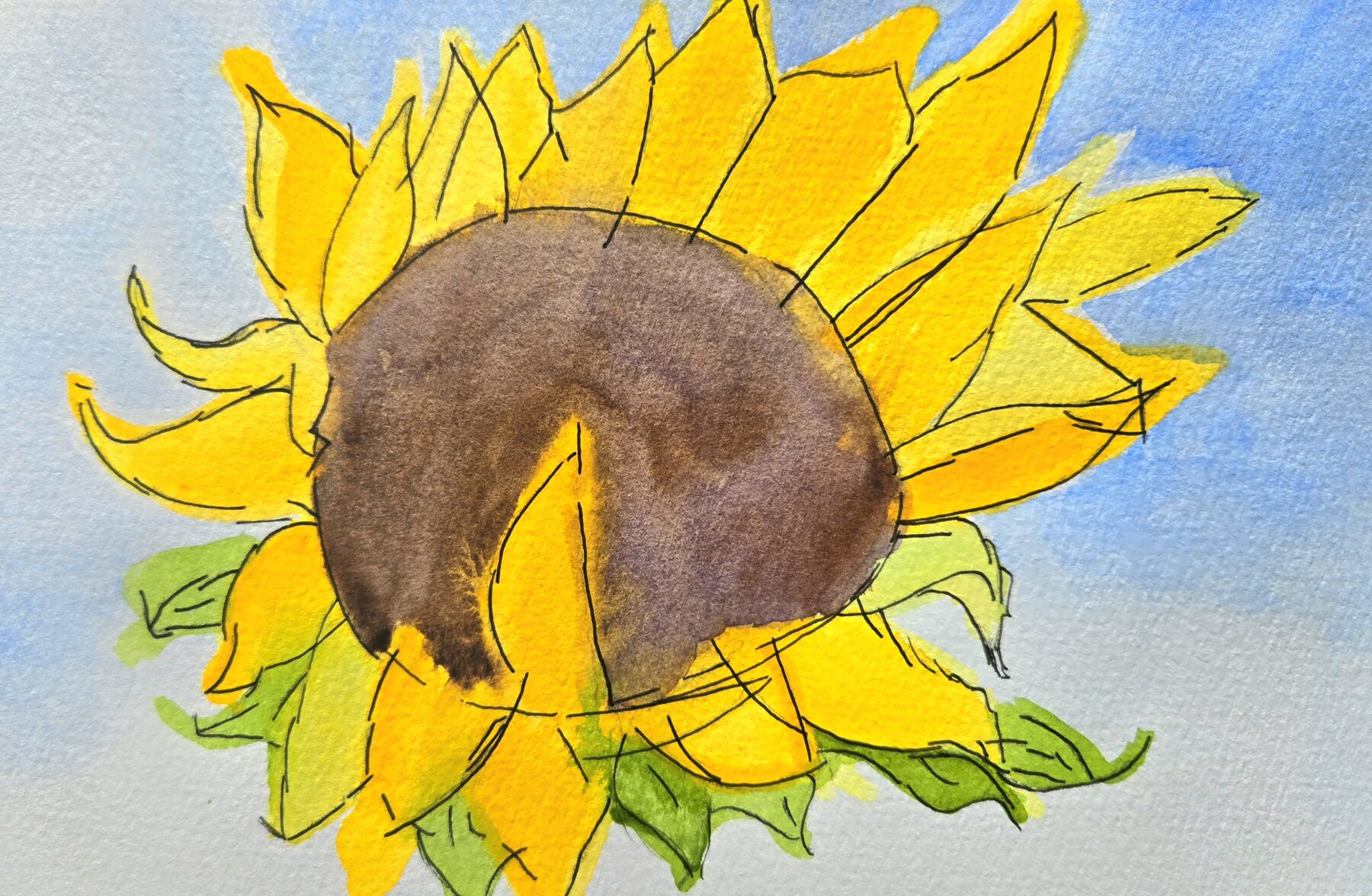
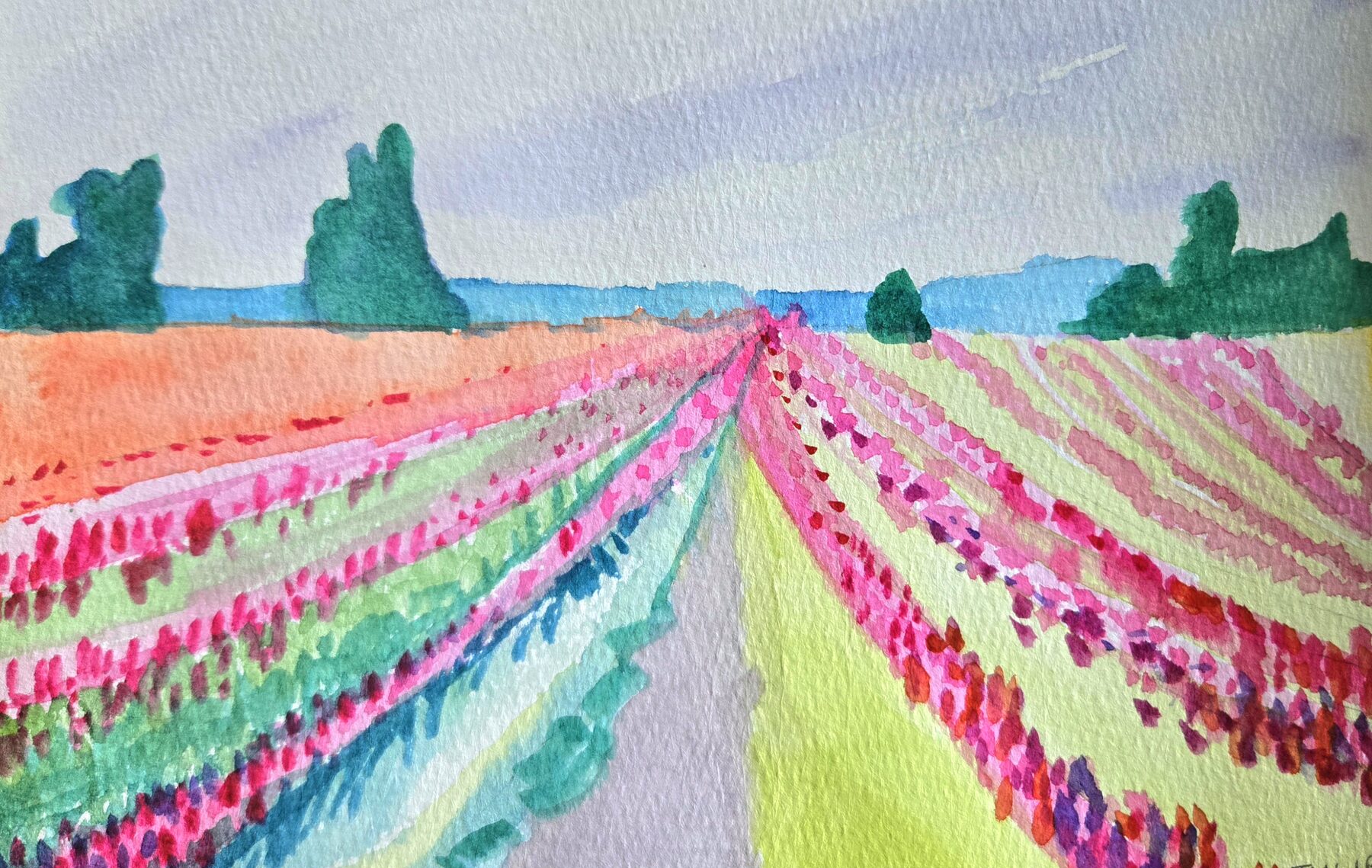
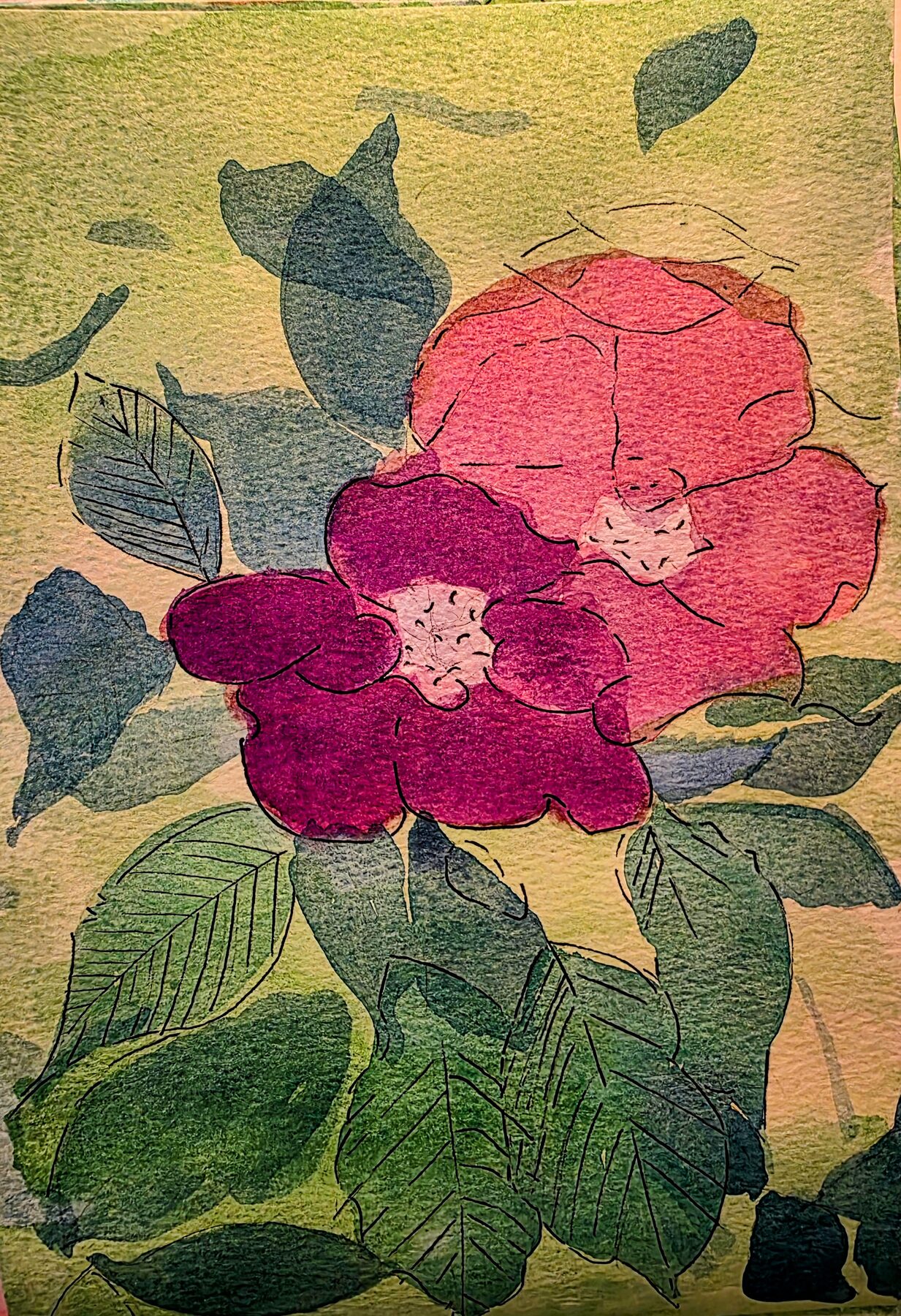
Full resolution files available on request.
Artist statement
Why I paint
I mostly paint gardens, water views, nature, and life at sea. I keep coming back to watercoloring the season I am in and whatever it happens to be producing. Foliage, plants, flowers, energy, produce, trees, herbs.
I paint because it lets my shoulders relax and my mind calm down. My artwork is for me first. I am not tied to how a viewer feels in front of it. People deserve the freedom to feel however they want, whether that is excitement, joy, calm, confusion, or nothing at all. Letting go of expectations about other people's feelings is part of the practice.
Watercolor glides onto the paper and moves with freedom to wherever the color wants to land. Acrylic runs smooth over a canvas and layers beautifully, and I reach for palette knives and popsicle sticks alongside brushes to get it to do what I want. When I watercolor I sketch first in graphite, then lay in pigment with a gentle water brush. Last, I like helping a painting pop off the page with a bit of black ink, highlighting a leaf or a flower petal here and there.
I avoid painting people. I take on too much of their mood when I do, good or bad, and I cannot seem to turn it off.
I learned to really see in 2024, when I started watercoloring at Cole Art Gallery. The class gathers around a big table and brings in pieces of nature to work from. Plants, flowers, foliage, fungi, branches, bouquets, anything you find in your garden. You hold the thing. You sit close to it. Then you stand up and step back and take inventory of the colors, the shapes, the energy. There is no deadline and no grade. That class gave me the space to be patient with what I saw, and to wait a little longer to look for more.
Over the past five years my work has become softer and more feminine, and it has moved from large canvases to small watercolor sketchbook journals. I spend every day at my studio. There is no typical order to the day. Some days I paint five paintings. Some paintings take me five years.
Biography
About me
I am a painter in Richmond Beach. My grandparents moved to this neighborhood in 1961 and raised my dad here, and my father first brought me down to Richmond Beach Saltwater Park in 1988, when I was five. That was also the year of my first art lesson, scraping black oil pastel off a page to let a rainbow underneath come through. I knew then that I was an artist.
I studied fine art at Shoreline Community College, earning an AA in 2006 and an AFA in 2012 with an emphasis on painting. I work in acrylic, watercolor, and gouache on canvas, wood, and paper. My work has been shown publicly in Shoreline, Edmonds and Seattle, and hangs in private collections in Washington, on Maui, and in Todos Santos, Mexico.
In 1994, as a sixth grader, I pressed my palm into a slab of clay for a school mural so that anyone who needed a hand to hold could stop at that wall and lay theirs over mine. It was my first piece of public art, and it is still the measure I use.
Execution
Built for ten winters outside
Materials and process
- Substrate3D-printed ASA orca body, 42 by 24 inches, supplied by RBCA
- PrepScuff sand, solvent wipe, exterior bonding primer in white
- Lower bodyPoured acrylic, worked wet, sealed once cured
- Upper bodyArtist acrylic thinned to transparent glazes, built in layers
- SealUV-resistant exterior clear coat, several passes, matte finish
- Service lifeTen years of seasonal outdoor display
Schedule
- Sep 30, 2026Application due to the selection panel
- Nov 15, 2026Orca bodies distributed to selected artists
- Dec 2026 to Feb 2027Prep, priming, the pour, then the glaze layers
- Mar 15, 2027Finished orca delivered
- Spring 2027Seasonal display in Richmond Beach
Contact
Get in touch
Prints, originals, and commissions. Studio inquiries welcome.